
Losing a tooth feels like a problem that ends at the surface, but the real consequences run much deeper, literally. What most patients do not realize is that a missing tooth triggers a biological process in the jawbone beneath it that begins within weeks and does not stop on its own. By the time the gap becomes an afterthought, the bone loss underneath may already be significant enough to complicate future treatment.
At Patriot Family Dental in Jacksonville, FL, this is one of the most important conversations Dr. Kevin Wiman has with patients who are weighing their options after losing a tooth. Dr. Wiman, a West Point graduate, U.S. Army veteran, and U.S. Navy retiree, approaches dental implant consultations with the same thoroughness he brings to every aspect of his practice. Understanding what is happening beneath the gum line is the first step toward making a decision you will not regret.
Why Teeth and Jawbone Depend on Each Other
The jawbone does not maintain itself passively. It responds to stimulation, and the primary source of that stimulation is the pressure generated by biting and chewing, transmitted through the roots of your teeth into the surrounding bone. This ongoing load signals the body to keep producing new bone cells in that area, maintaining the density and volume needed to support a healthy, functional jaw.
When a tooth is lost, that signal disappears. The bone at the extraction site no longer receives the mechanical input it needs to sustain itself, and the body, operating on a use-it-or-lose-it principle, begins redirecting resources elsewhere. The result is a gradual but steady reduction in both the width and height of the alveolar ridge, the part of the jawbone that holds your teeth.
How Fast Bone Loss Actually Happens
The timeline is faster than most patients expect. Research consistently shows the most significant resorption occurs within the first three to six months after extraction, with studies reporting a width loss of 29 to 63 percent of the alveolar ridge during this period. If no action is taken, the process continues at a slower rate for years. According to data from the National Institute of Dental and Craniofacial Research, about 15 percent of seniors 65 and older have lost all of their natural teeth, and the progressive bone loss that accompanies tooth loss plays a meaningful role in that trajectory.
This is not a slow, abstract process. It is one that meaningfully narrows your treatment options the longer it goes unaddressed.
What Bone Loss Means for Your Treatment Options
The volume of bone present at an implant site directly determines whether an implant can be placed there and whether additional preparatory procedures will be required first. A patient who addresses tooth loss promptly often has enough bone remaining to support implant placement without supplemental grafting. A patient who waits months or years may face a more complex treatment path.
The options for replacing missing teeth carry different implications for bone health as well. Consider what each path involves:
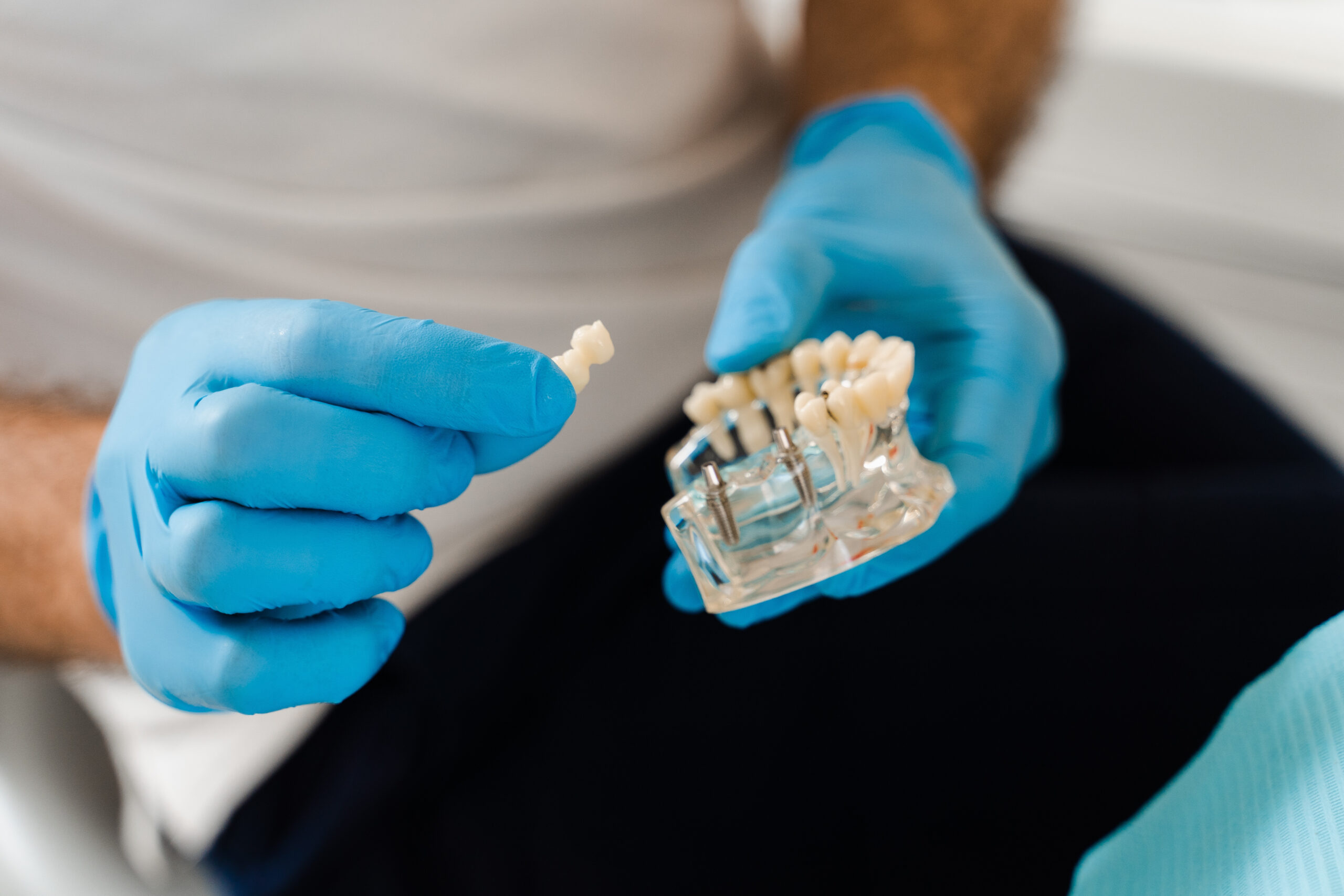
- Dental implants: The titanium post integrates with the jawbone and mimics the stimulation of a natural root, actively preventing further bone loss at the site
- Dental bridges: Restore the appearance and function of the missing tooth but do not address the bone beneath it, allowing resorption to continue unimpeded
- Removable dentures or partials: Rest on the gum surface and provide no root-level stimulation, which means bone loss continues and can actually accelerate over time
The path you choose now determines what your jaw looks like in five or ten years, which is why the conversation about replacement options is worth having as soon as a tooth is lost.
Evaluating What Is Still There
Before any treatment is recommended, we need to know the current state of the bone at the site in question. We use 3D CBCT imaging to generate a precise, three-dimensional view of the jawbone, allowing us to measure the height, width, and density of available bone with accuracy that standard x-rays cannot provide. This imaging guides every decision about implant placement, including whether bone grafting may be needed to rebuild the site before proceeding.
For patients exploring how to finance treatment, our financing options page outlines the flexible plans available through CareCredit, Alphaeon, and Cherry.
Frequently Asked Questions About Jawbone Loss and Dental Implants
How soon after losing a tooth does jawbone loss begin?
The bone beneath a missing tooth starts losing density within weeks of extraction because it no longer receives the stimulation generated by biting and chewing. The most significant loss typically happens in the first three to six months, with a slower, ongoing decline afterward if the tooth is not replaced.
How much jawbone can be lost after a tooth is extracted?
Research on post-extraction bone changes shows the alveolar ridge can lose roughly 29 to 63 percent of its width within the first six months when a tooth is not replaced. That is why addressing a missing tooth sooner generally preserves more treatment options down the road.
Can I still get a dental implant if I have already lost some jawbone?
Often, yes. When bone loss is moderate, a bone grafting procedure can rebuild the site enough to support an implant. 3D CBCT imaging is used beforehand to measure the exact height, width, and density of the remaining bone so a treatment path can be planned accordingly.
Do dental bridges or dentures stop jawbone loss?
No. Bridges and dentures restore the visible tooth but sit on or around the gum without transmitting chewing pressure into the bone underneath, so resorption continues. Dental implants are the replacement option that provides that ongoing stimulation to the jaw.
How is jawbone loss evaluated before implant treatment?
3D CBCT imaging creates a three-dimensional view of the jawbone, allowing the height, width, and density of available bone to be measured more precisely than with a standard x-ray. That information determines whether an implant can be placed directly or whether bone grafting is needed first.
Take the Next Step with Patriot Family Dental
The window to act with the most options available is not permanent. If you have a missing tooth, even one you have been living with for a while, the best time to understand your situation is now. Dr. Kevin Wiman’s background as a U.S. Army veteran and U.S. Navy retiree shaped a disciplined, patient-first approach to care that Jacksonville families and veterans have come to rely on. He takes the time to explain what is happening, what your options are, and what the tradeoffs look like so you can make an informed decision. Learn more about his background and clinical philosophy on his provider profile.
Do not let a missing tooth quietly reshape your jaw while you wait. Contact our office to schedule a consultation at Patriot Family Dental and find out where you stand.