Oral cancer screening in Jacksonville, FL for early detection and proactive oral health care.
Oral cancer is one of the most serious conditions a dental team can identify, and it is also one of the most treatable when it is found early. The challenge is that early-stage oral cancer rarely causes pain or obvious symptoms, which means patients have no reliable way to self-detect it without a clinical examination. By the time discomfort appears, the disease has frequently already advanced to a stage where treatment becomes significantly more complex and outcomes become less predictable.
At Patriot Family Dental in Jacksonville, FL, we include oral cancer screenings as a standard part of every comprehensive exam because we believe thorough preventive care means looking for things patients cannot see on their own. Dr. Kevin Wiman, a West Point graduate, U.S. Army veteran, and U.S. Navy retiree, brings the same disciplined, detail-driven approach to every screening we perform under our general dentistry services. A few minutes of careful examination during a routine visit can make an outcome-defining difference.
The relationship between early detection and survival in oral cancer is well established. According to the National Institute of Dental and Craniofacial Research, the five-year survival rate for oral cancer diagnosed at a localized stage is 86.3%, compared to just 40.4% when the disease has spread to distant sites. Overall, 68% of people with oral cancer survive five years, but that number climbs significantly when the condition is caught and treated before it has the opportunity to progress. These figures make one point abundantly clear: the timing of detection matters enormously, and routine screenings are how early detection happens.
Despite these statistics, oral cancer is frequently diagnosed at advanced stages precisely because it is painless and visually subtle in its earliest form. A small white or red patch, a minor swelling, or a non-healing sore may not prompt concern from a patient, but each is a finding a trained clinician knows to examine carefully. Regular screenings close the gap between what patients can observe and what their dental team is trained to identify.
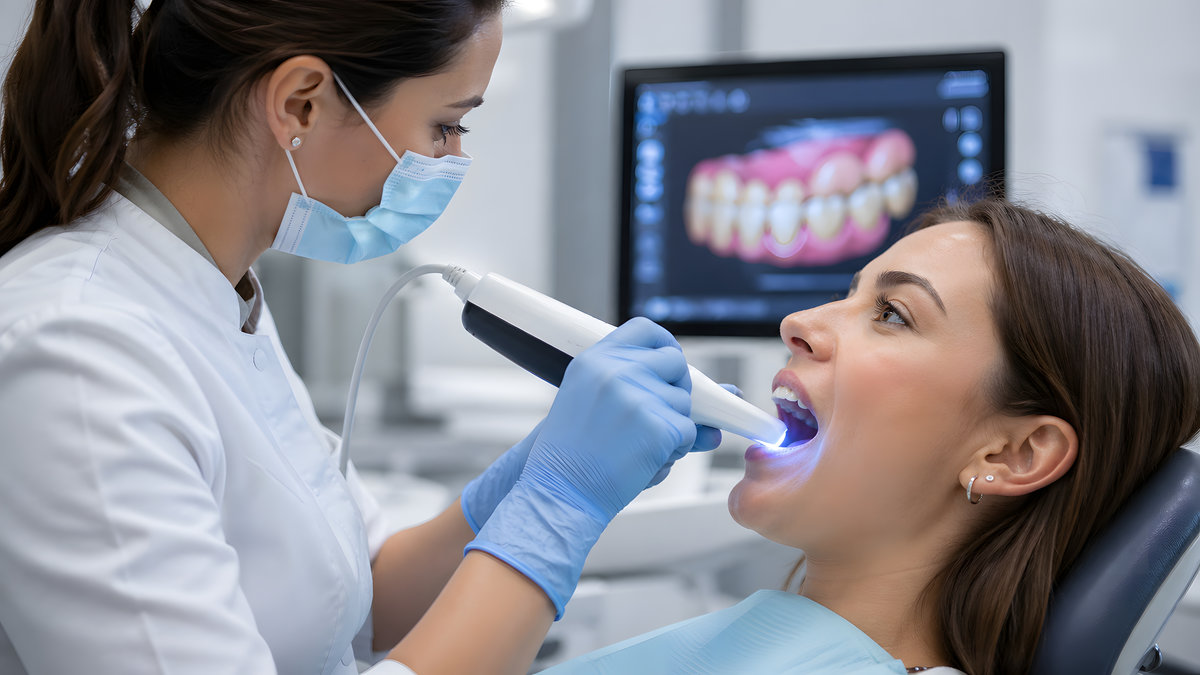
An oral cancer screening at Patriot Family Dental is a thorough, systematic visual and tactile examination of the entire oral cavity and surrounding structures. It requires no special preparation, causes no discomfort, and adds only a few minutes to your regular dental visit.
We begin by examining the lips, both the outer surface and inner lining, followed by the cheeks, the floor of the mouth, the tongue on all sides, the roof of the mouth, and the back of the throat. We also feel along the jaw and neck for any enlarged lymph nodes or unusual tissue changes. Any area that appears irregular in color, texture, or dimension receives additional attention, and we document our findings carefully to track any changes over time.
If we identify an area of concern, we will discuss it with you clearly and without alarm. Not every unusual finding indicates cancer, and many benign conditions can mimic early warning signs. In some cases, we may recommend returning in two to three weeks to see whether the area resolves on its own. In others, we may refer you to a specialist for a biopsy or additional evaluation. When indicated, our 3D CBCT imaging technology gives us a deeper look at surrounding structures, including bone, tissue density, and lymphatic regions, that conventional x-rays cannot capture.
While we screen every patient regardless of risk profile, certain factors are known to elevate the likelihood of developing oral cancer. Understanding your personal risk helps our team prioritize and contextualize what we find. Patients at higher risk include those with a history of tobacco use in any form, those with significant alcohol consumption, individuals with a history of HPV infection, patients over the age of 40 (particularly men), and anyone with a prior oral cancer diagnosis or a family history of head and neck cancers.
It is worth noting that oral cancer diagnoses among non-smokers and younger adults have been rising, largely connected to HPV. This shift underscores why annual screenings benefit patients at every risk level, not just those with traditionally high-risk habits. The safest assumption is that no one is categorically exempt from the need for regular evaluation.
The most effective strategy for oral cancer detection is consistency. Patients who attend their regular preventive visits give our team the opportunity to build a baseline understanding of what their oral tissues normally look like, which makes it easier to identify meaningful changes over time. A finding that might be ambiguous in isolation becomes much clearer when we can compare it to the record of prior visits.
We recommend patients schedule oral cancer screenings at least once per year, ideally as part of their routine comprehensive dental examination. Patients who need restorative dentistry or are managing ongoing dental concerns should understand that comprehensive care and cancer screening go hand in hand. Maintaining overall oral health and staying current with screenings is not an either/or proposition. For patients interested in understanding the full range of their care options and payment plans, our financing options page outlines the flexible plans available through CareCredit, Alphaeon, and Cherry.
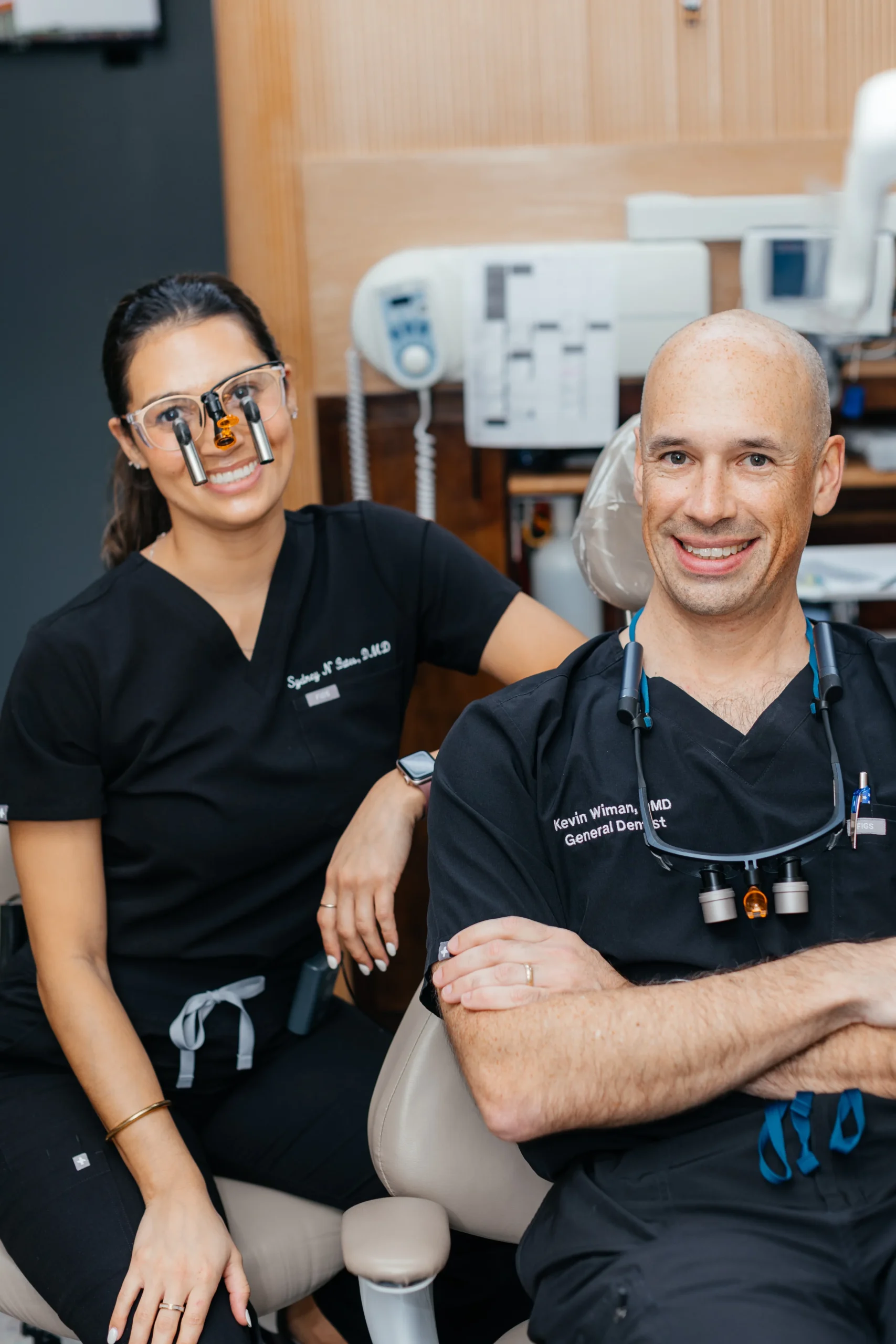
A thorough oral cancer screening requires more than going through the motions. It requires a clinician who is genuinely looking, who takes the time to examine every surface carefully, and who communicates findings with honesty and clarity. At Patriot Family Dental, Dr. Wiman’s military background shaped a philosophy of precision and accountability that carries directly into how we conduct every screening. We do not rush these examinations, and we do not minimize findings. Learn more about the care philosophy and background Dr. Wiman brings to every appointment by reading his full provider bio.
Oral cancer is a serious disease, and you deserve a team that treats it that way. If you are due for a screening or have noticed any changes in your mouth that concern you, do not wait. Contact our office to schedule your oral cancer screening at Patriot Family Dental and put the most powerful tool available, early detection, on your side.
Here are answers to the questions patients most often ask about oral cancer screenings at Patriot Family Dental.
An oral cancer screening at Patriot Family Dental is a visual and tactile examination of your entire oral cavity and surrounding structures. It requires no special preparation and causes no discomfort. Dr. Wiman systematically examines the lips, cheeks, floor of the mouth, all surfaces of the tongue, the roof of the mouth, and the back of the throat. He also palpates the lymph nodes along the jaw and neck to check for unusual swelling. The process typically adds only a few minutes to your routine visit and is performed as part of your comprehensive dental examination.
We recommend at least one oral cancer screening per year for every patient, ideally as part of your regular preventive dental visit. If you have elevated risk factors, such as a history of tobacco or alcohol use, a prior oral cancer diagnosis, or a known HPV-related history, your care team may recommend more frequent evaluations. Because early-stage oral cancer rarely causes noticeable symptoms, annual screenings give our team the opportunity to monitor your oral tissues over time and identify any changes before they progress.
Between dental visits, you should contact our office if you notice any of the following: a sore in your mouth or on your lips that has not healed within two weeks, a red or white patch on the gums, tongue, tonsil, or lining of the mouth, a persistent lump or thickening in the cheek or neck, unexplained numbness or pain in the mouth or jaw, difficulty chewing, swallowing, or moving the tongue or jaw, or a chronic sore throat without another explanation. None of these symptoms confirms a diagnosis, but each warrants professional evaluation rather than a wait-and-see approach.
No. An oral cancer screening is completely non-invasive and causes no pain or discomfort. Dr. Wiman will visually examine the soft tissues of your mouth and gently feel along the jaw and neck. There are no instruments inserted, no needles, and no recovery time. If a finding requires additional follow-up, such as a biopsy performed by a specialist, that would be a separate procedure arranged through a referral. The screening itself at Patriot Family Dental is straightforward and takes only a few minutes.
Oral cancer can develop in anyone, but certain factors significantly increase the risk. These include tobacco use in any form, including cigarettes, cigars, pipes, chewing tobacco, and snuff; heavy alcohol consumption; infection with certain strains of the human papillomavirus (HPV), particularly HPV-16; prolonged or unprotected exposure to ultraviolet light, which affects the lips; age 40 or older; and a personal or family history of oral cancer. Veterans and active military service members who have used tobacco are also at elevated risk. Understanding your personal risk factors helps us tailor the frequency and focus of your screenings.
In most cases, oral cancer screenings are included as part of a comprehensive dental examination, which is covered by most dental insurance plans. Patriot Family Dental accepts a wide range of insurance plans including Delta Dental PPO, Cigna Dental, Aetna Dental, MetLife, Humana Dental, TRICARE for active duty military and their families, and Veterans Affairs coverage. For patients who are uninsured or want to understand their out-of-pocket costs, our team is happy to walk you through your options. We also accept CareCredit, Alphaeon, and Cherry financing for any treatment that may follow a screening.
Mon - Thurs: 8AM to 4PM Fri: By Appointment Only Sat - Sun: Closed
Thank-you offers for our neighbors, our families, and those who served.
Receive a brighter smile in a single visit with $250 off.
Straighten your smile with fifteen hundred dollars off your full Invisalign treatment.